
 Order | Reorder
1. Start with the fleet, not the claim
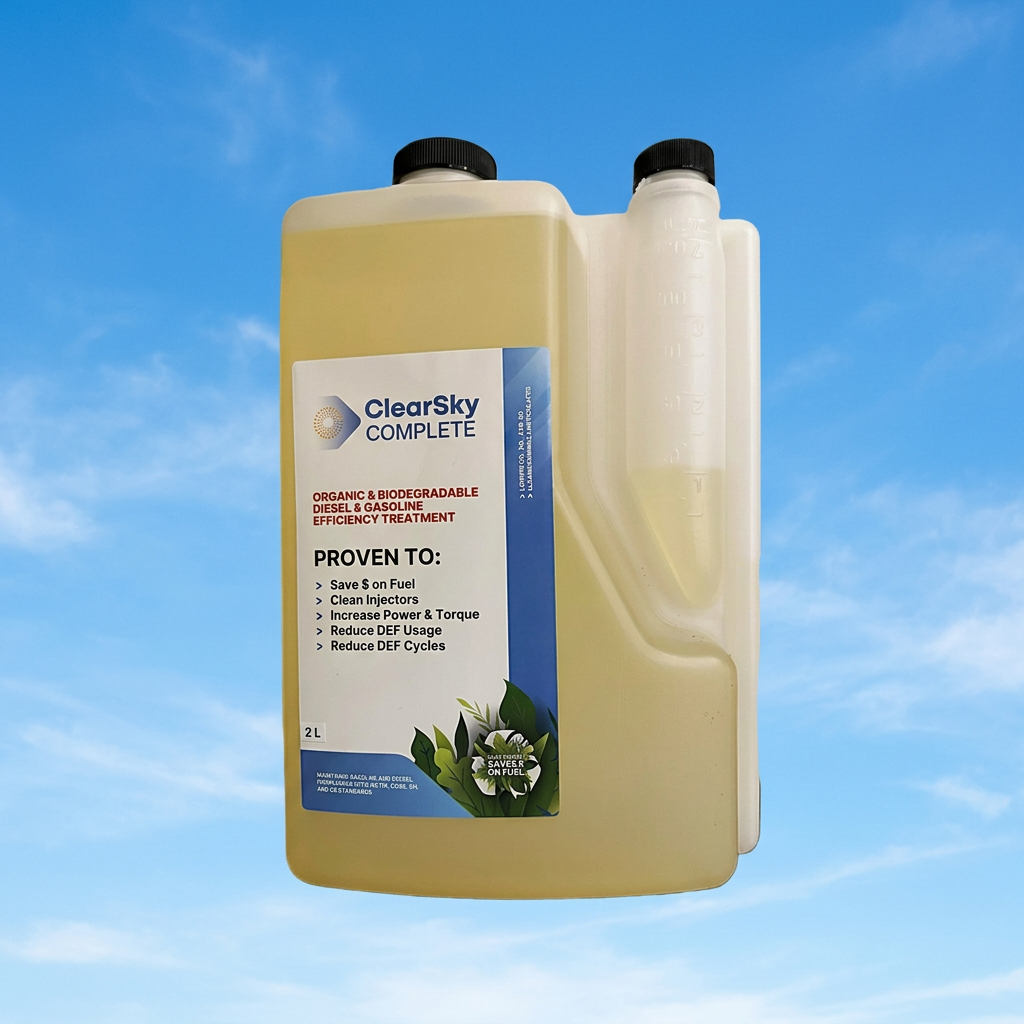
ClearSky Complete is a drop-in fuel treatment intended to support more complete combustion without engine modifications. The applications described on this site include road transport, agriculture, construction, mining, transit, and oilfield equipment.
Before a pilot, record the fuel blend, equipment types, engine condition, refuelling method, and operating conditions. Review the user guide and safety documentation with the person responsible for fuel handling. Confirm any equipment-specific or fuel-blend questions with ClearSky Complete and your equipment supplier before use.
A treatment pilot is not a substitute for maintenance or your fleet's winter-fuel procedures. Keep those procedures in place and document changes that could influence the results.
2. Dose the fuel you add
The diesel dosing ratio published by ClearSky Complete is 1 litre of treatment per 2,000 litres of diesel. That is 0.5 millilitres of treatment per litre of diesel. This is the diesel ratio; do not apply it to gasoline.
| Diesel added | Treatment required |
|---|---|
| 200 litres | 100 mL |
| 500 litres | 250 mL |
| 1,000 litres | 500 mL |
| 2,000 litres | 1 litre |
ClearSky Complete can be dosed in bulk storage or at the pump. Use the measured quantity of diesel added, not the tank's maximum capacity. Record which fuel has already been treated so a bulk-tank dose is not repeated at the vehicle. Follow the user guide for handling and application.
User guide & dosing instructions (PDF)3. Run a comparable fleet pilot
Start with a manageable group of vehicles or machines with reliable records. Compare untreated and treated operation under similar conditions; if you use a control vehicle, match its work as closely as possible. A single good tank is not enough to establish a repeatable saving.
- Establish a baseline. Collect fuel receipts or dispensing records alongside kilometres, engine hours, or production output over several representative operating cycles.
- Keep the comparison fair. Track payload, route, driver, idling, weather, fuel blend, and maintenance. Note any changes rather than attributing every difference to treatment.
- Keep a treatment log. Record vehicle or tank ID, date, diesel added, dose, and the person applying it. Use the same measurement method before and during the pilot.
- Repeat the comparison. Review multiple comparable cycles, including any poor results. If the workload changes substantially, collect a new comparable baseline.
4. Measure fuel use and net value
For road vehicles, compare litres per 100 kilometres: litres used ÷ kilometres travelled × 100. For machines doing comparable work, litres per engine hour can be useful. If output changes, also consider fuel per unit of work, such as tonnes moved. Lower fuel consumption only means better efficiency when the work is comparable.
Calculate the consumption reduction as (baseline consumption rate − treated consumption rate) ÷ baseline consumption rate × 100. Keep this separate from changes in diesel prices: a lower invoice does not necessarily mean less fuel was used.
For a financial decision, value the measured litres saved at your actual fuel price, then subtract the treatment cost and any additional handling cost. Use your fleet's purchasing terms rather than an assumed diesel price or a headline savings percentage.
Smoke, power, and driver feedback can be useful observations, but they are not substitutes for fuel records. Do not treat visible smoke changes as a measured emissions result without appropriate testing.
5. Read the evidence in context
ClearSky's fuel-savings statement dated November 18, 2025 reports data or reported results for ninety engine pilots across a range of applications and fuels. That document reports reductions in fuel consumption rate from 3.2% to 28%, with an average improvement of 10.1%.
These are figures reported in the company's dated statement, not a guarantee for your fleet or an independent verification by this guide. The summary is not a diesel-only fleet result. Ask for the underlying test details relevant to your equipment, fuel, duty cycle, and measurement method before using a reported average in a budget.
Your own pilot should determine whether treatment provides repeatable, net value under your operating conditions. Retain both the baseline and treated records so the decision can be reviewed.
Ready for a measured fleet pilot?
Review the product documentation, choose comparable equipment, and set up your fuel log before ordering.
View the fleet pilot offer